
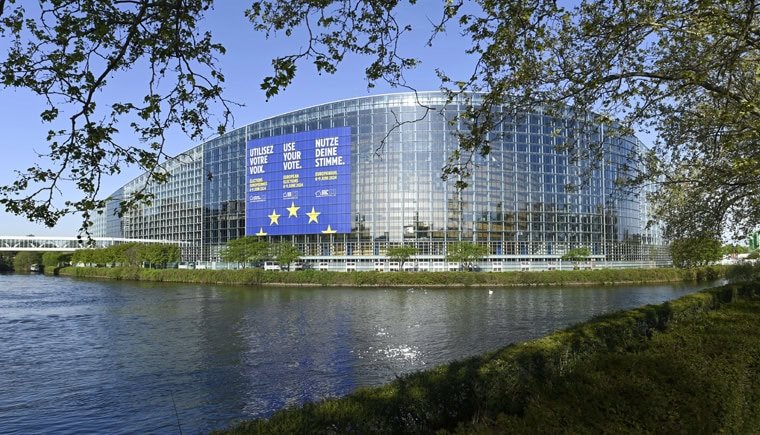
The political landscape of both the UK and EU has changed dramatically following recent elections, write law professor David McGrogan and IPA Research Fellow Lana Starkey.
The results of the July 4 UK General Election must surely qualify as the most unusual in living memory. A foreign observer, seeing the headline figures—the Labour Party won 411 seats in the House of Commons, giving them a 174-seat majority—would reasonably assume there had been a surge of public support for Labour along the lines of that experienced by the party in 1997, when genuine enthusiasm for a Tony Blair premiership saw Labour win a majority of 179. But scratching beneath the surface reveals something very different. While Blair’s Labour won 43.2 per cent of the national vote in 1997 (and while Boris Johnson’s Conservatives won 43.6 per cent in 2019), this time around the new government’s huge landslide comes off the back of a mere 33.7 per cent of votes. Indeed, Labour only increased its vote share on what it received in 2019 by 1.7 per cent and in fact received fewer votes in nominal terms than the disastrous Jeremy Corbyn-led Labour campaign that year. This, in other words, is not a popular government, and Sir Keir Starmer is not a popular politician. Yet he has won one of the largest electoral victories in UK parliamentary history.
How has a party with only a third of the popular vote, and which appears if anything to have declined in popularity since the last election, won such a stonking majority?
There are several reasons. Some of them are to do with the vagaries of the UK’s electoral system, which often produces results bearing little relation to the national popular vote. But the most influential, as ever, were political. Here, there are several important factors, which we can put into two groups.
The first group of reasons concerns the Tory Party. The Tories went from 365 seats to 121, and haemorrhaged votes to the tune of more than six million since last time around, garnering a mere 23.7 per cent of the national vote. In other words, Labour did not win the election—the Conservative Party lost it. It had become the object of contempt, and in a sense that was all there was to it. All Labour needed to do was stand still in order to triumph, and indeed media commentators often referred to Starmer metaphorically ‘carrying a Ming vase’ throughout the campaign. His only task was not to drop it.
Political parties lose momentum.
This does not really explain why the Tories had become so hated, though. The first thing to say here is that the Tories were in power since 2010 and over the course of 14 years had clearly become clapped out. The period from 2016-2024 was an especially tumultuous one in British political history. The Brexit vote produced something akin to a collective nervous breakdown among the political class and occupied its entire attention throughout 2017-2019. No sooner was the parliamentary trench warfare over (in January 2020) than the nation entered lockdown, with all the anxieties and difficulties that entailed. After that came a series of scandals which tore down Boris Johnson’s leadership, closely followed by the short-lived premiership of Liz Truss, all amid frantic efforts to respond to the economic disruption caused by the war in Ukraine. By 2023 it was evident the government was simply exhausted, out of ideas, and almost resigned to a period in opposition after the next election. The party was simply never going to be able to get the juices flowing for a vigorous and successful general election campaign—and it didn’t.
For a party that governed for 14 years (though the first five of those years were spent in coalition with the Liberal Democrats) to become stale and lethargic is to a certain extent understandable. It follows a pattern in recent British politics: something similar happened to the Tories in 1997 after 18 years in government, and to Labour in 2010 after 13 years in power. Over time, political parties simply lose momentum in government.
Other, more damning factors were at work, too. One was that Rishi Sunak, the sitting PM, revealed himself to be a catastrophically inept politician over the course of 2024. His ascension was meteoric; after a career in hedge funds he found himself appointed Chancellor of the Exchequer in 2020, whereupon he became popular for handing out sweeties during the lockdown period (his main role was to organise the funding of ‘furlough’—the scheme by which the government paid the population not to go to work). After having lost in the Conservative leadership election to replace Boris Johnson in 2022, he was elected unopposed a few months later after Liz Truss was ousted.
One cannot out-socialist a socialist.
It quickly became apparent he was not up to the job. He set himself five targets as leader, two of which had nothing really to do with him and would likely happen anyway—reducing inflation and ‘growing’ the economy—and three of which had no real success—cutting debt, reducing NHS waiting lists for operations, and stopping illegal migration across the English Channel with a controversial plan to remove asylum seekers to Rwanda for processing.
He called a snap election for July 2024 which it seems none of his colleagues were expecting, and throughout the campaign proved to have an absolute tin ear for political theatre. His opening campaign speech was delivered in the open air in torrential rain—imagine a politician launching a bid to become Prime Minister while looking and sounding like a drowned rat—and quickly torpedoed whatever claim to dedication he might have had by leaving a commemorative D-Day memorial event early (and thereby being seen to openly snub a collection of centenarian war veterans) so as to appear in a TV interview.
The more important issue, though, is that the Tories had clearly lost sight of what Conservative government is supposed to look like. During the David Cameron years of 2010-2016, the Tories fought a ferocious battle to shrink the size of the state against what right-wing commentators call ‘the Blob’, roughly equivalent in meaning to the ‘Deep State’. And they had some successes. Cameron also had developed something of a coherent doctrine of small-state conservatism, based around his concept of the ‘Big Society’: the idea here being that by making the state smaller, society will be strengthened. But all this went out the window, first when the party turned in on itself to fight a protracted war over Brexit, and later, much more importantly, during lockdown.
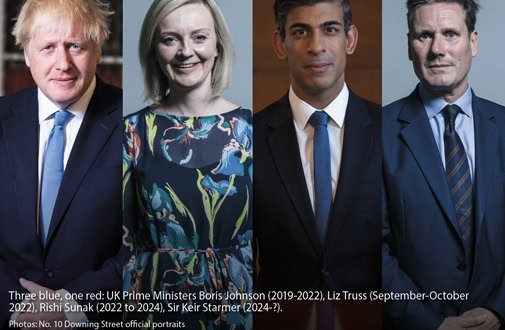 Three blue, one red: UK Prime Ministers Boris Johnson (2019-2022), Liz Truss (September-October 2022), Rishi Sunak (2022 to 2024), Sir Keir Starmer (2024-?).
Photos: No. 10 Downing Street official portraits
In the course of just a few months, in March-May 2020, the Tories presided over a vast and rapid expansion in the size of the state, and in such a way as to signal to the electorate that government was the solution to more or less every problem in life—including even death. Boris Johnson’s repeated proclamation that the government would ‘put its arms around’ the population was accompanied by eye-watering public expenditure (up to £410 billion), and the state expanded from 39 per cent of GDP in 2019 to 53 per cent in 2021.
Lockdown barely made an appearance during the 2024 election campaign (what happened during the Covid years has been well and truly memory-holed by the political class), but clearly it had a big impact. What Boris Johnson’s government did, in 2020, was to preside over a shift in the ‘Overton window’. It transformed the subject of British political discussion into a matter of what the state could do, with the result being an abandonment of the questions of how big the state should be, and whether it should be doing some things at all. That this was the case was aptly demonstrated by the rapid defenestration of Liz Truss, who as PM made some astonishingly naïve blunders, but whose low-tax, pro-growth agenda was clearly never going to make any headway given the prevailing post-Covid sentiment about the role of the state. The consequence of all this was the damning of the Conservative Party to political obscurity. If there is one thing the Tories cannot do, it is to outcompete the type of promises Labour will make in respect to state spending. One cannot, from the right, out-socialist a socialist—and this is really the true meaning of the Tory’s 2024 electoral loss. Faced with the choice between Labour-lite and Labour, the electorate decided it would rather have silk than cotton.
The second group of factors are distinct from party politics, but they relate to the first group, as will become clear. This is that the British state, economy, and society are in a bad way and the problems confronting the country are structural rather than based in policy. National debt has ballooned over the last 25 years. When Blair came to power in 1997 it was £350 billion; now it stands at roughly £2.7 trillion. This has been accompanied by a process of stagnation in terms of economic growth and productivity, and a declining birthrate—an extremely dangerous combination of factors in a country with a very large number of retirees to support—and Australians should take note here, too. The number of people on out-of-work welfare benefits has also increased, to 5.6 million. Mass immigration has brought huge pressures on public services and the housing market, the latter issue exacerbated by a failure to build enough homes in the right locations. And there is an incipient mental health crisis evident in the number of people who are ‘economically inactive’ due to long-term sickness—now nearly three million.
No governing party could really preside over such a collection of thorny problems without encountering dissatisfaction, and the Tory Party’s loss in the most recent election is as much a result of a failure to grapple with those underlying issues as it is anything else. (Truss’s brief period in office can be understood as an honourable failure to try to do so.) The British electorate is not happy, and when people are not happy, they tend to blame incumbent governments. The one thing the Conservatives might have done to begin to provide a remedy—to kickstart growth by reducing the overbearing size of the British state—was off the table, for reasons given earlier, with the result being a party consigned to near extinction.
The problems confronting Britain are structural.
The future consequently looks bleak. The Labour Party has no real answers to Britain’s problems beyond increasing taxes, increasing public sector pay, increasing the regulatory burden on businesses, and increasing state spending, based on a ludicrous evolution of Keynesianism into what the new Chancellor, Rachel Reeves, calls ‘securonomics’—meaning an ‘active state’ which focuses on industrial policy and uses capital spending to promote growth. This, it goes without saying, will not work. So, if the country appears pessimistic now, in five years’ time (assuming the next election is not held before then) things may very well be close to apocalyptic. Whether the Conservative Party is able to take advantage of this is of course an open question, but it is going to have to take a long, hard look at itself in the interim in order to discover whether it has any answers to the problems besetting the country.
One month before the UK elected a left-wing government Europe found itself, if remaining centre-right, with an Overton window shifted markedly right of that centre. The EU Parliamentary elections, which took place between June 6 and 9 this year, saw the European People’s Party, a centre-right grouping led by President of the European Commission Ursula von der Leyen, secure the most seats (188 out of 720). However, this was only up one seat from 2019 and von der Leyen and the centrist European Council now face five years of a Parliament not only less centrist and less green but the most right-wing in EU history.
While the centre-left Alliance of Socialists and Democrats remains the second largest group in the bloc, it took a serious blow, losing 12 seats; and the newly formed Patriots for Europe (PfE) led by Jordan Bardella and made up of MEPs from the likes of Viktor Orban’s Fidesz, Geert Wilder’s PVV, Italy’s Lega, and the Freedom Party of Austria (FPÖ), emerged as Parliament’s third largest group. The European Conservatives and Reformists (ECR) dominated by Giorgia Meloni overtook the centrist Renew Europe as the fourth largest group, with Renew losing a staggering 20 seats and the ECR gaining 16. Indeed, we now have an EU Parliament wherein the oft-called ‘far-right’ Meloni looks almost more representative of the centre than Ursula von der Leyen.
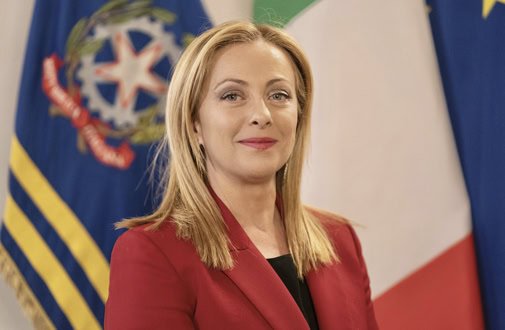 Prime Minister of Italy Giorgia Meloni is now positioned as the kingmaker of Europe.
Photo: Governo Italiano
While the Parliament has limited powers compared with the centrist-led European Commission and Council, and cannot directly initiate laws, it can veto and shape them, and it is responsible for approving the EU budget. In this way, and as the only EU institution directly elected by citizens, it sets the tone for Europe. It is this tone, usually considered ‘largely symbolic’ that has this year already proved consequential. The two biggest powers, Germany and France, came out significantly weakened on their domestic fronts, while Brothers of Italy won over 28 per cent of the vote, consolidating Meloni’s power at home and positioning her as kingmaker of Europe. Meloni is in something of a tight spot and whether she will make a serious attempt at upending the Brussels blob remains to be seen. Shut out of a backroom deal on Commission jobs at the first step, her relations with von der Leyen have only soured —the latest a spat over a rule of law report on Italy’s public broadcaster.
What is clear is that for European voters the tone is now one that rings far to the right of Brussels and the upshot is that centrist checks and balances in place are beginning to wear thin. Since June, unorthodox coalitions, concessions, and very shaky (or ineffectual) cordons sanitaires have punctuated European politics, however, after five long years marked by COVID, war, unchecked migration and economic downturn, such a seismic shift should not have come as a surprise.
Strong borders are very much in.
Five years of economically punishing green policies, the devastating effects of which were deeply felt after the post-pandemic and on-going cost of living crisis, were soundly rejected across the bloc; with the Greens losing a third of their seats. Much of this loss was felt in Germany where support for the Greens fell by almost 50 per cent and where a successful left-wing push to lower the voting age to 16 backfired, with the youngest voters rejecting the Greens and moving to Alternative for Germany (AfD).
With the Greens all but out, Chancellor Olaf’s ruling federal ‘traffic light coalition’ looks on its last legs and the Social Democrats (SPD) recorded their worst result in a national vote in more than a century. Scholz’s party was beaten by AfD which finished second with 16 per cent, gaining five percentage points on its 2019 result. While the centre-right Christian Democrats (CDU/CSU) were the clear winners federally, securing 30.2 per cent of the overall vote, the AfD won in every state in the East, including Brandenburg (the state of Berlin) with a decisive 27.5 per cent.
While the Green dream looks over, strong borders are very much in. Unchecked migration was (and is) the number one issue for many voters and it was at the centre of every far right or ‘populist’ success story on the continent—even cutting across party lines. The populist left-wing, anti-immigration Sahra Wagenknecht Alliance (BSW) won six seats in the EU Parliamentary elections and captured as high as 15 per cent of the vote in several Eastern strongholds. Recent German state elections have shown its support only rising, and it can be seen as something of an alternative, far left, AfD. In the elections in Saxony, Thuringia, and Brandenburg, which saw the AfD win its first state election (Thuringia 33 per cent) and record its best result ever (Saxony, 38 seats), the BSW showed itself to be the other new anti-immigration player on the block. In response to this, and AfD’s unprecedented gains and win in Thuringia, the hitherto ‘open’ centre when it comes to migration moved, and on 16 September Scholz’s ruling traffic light coalition introduced stricter controls at the country’s borders.
While the results in Germany should be watched the most closely as they ostensibly matter most, Austria and the Netherlands are of note in that they are pointed in the direction Europe looks to be headed. Both countries now have ‘far-right’ parties that won nationwide elections, however both faced (and are facing) cordons sanitaires that look rather ineffective. In the Schoof cabinet the minister of Asylum and Migration as well as the State Secretary for Justice and Security are members of PVV, and Geert Wilders’ party wields considerable power. Increasingly we are seeing the ‘far-right’ conducting from the wings, perhaps the most clearly in Sweden, where the survival of the executive relies on a confidence and supply agreement with the far-right Sweden Democrats, the second-largest force in the Riksdag. While Sweden was an outlier in the EU elections with the Social Democrats winning the most seats, the PVV’s popularity at home seemingly spilled over to the EU vote and it finished second in June. When we recall that in the last EU election the PVV lost all its seats in the EU Parliament we start to get an idea of not only how quickly things have changed but how decisive the shift to the right is. In Austria the FPÖ came out on top with 25.4 per cent in a result that marked the first time the party has won a nationwide election. More recently, on 29 September, it achieved its best result in the party’s history, winning Austria’s legislative election with 29.2 per cent of the vote.
The FPÖ ran on an anti-immigration platform, with party leader Herbert Kickl promising to build ‘Fortress Austria’. The Anglosphere press have made much of the FPÖ’s so-called ‘Nazi’ history stating, amongst other things, that the FPÖ “was founded in the mid-1950s by former members of the German SS”. While the first leader of the party, Anton Reinthaller, was a former SS officer, the FPÖ did not advocate far-right policies and presented as a liberal alternative to the socialist SPÖ and the Catholic ÖVP. The party only took an ideological turn towards right-wing populism in the 1980s, and while there are no doubt far-right extremists and neo-Nazis in Austria, the FPÖ is not a party made up of ‘neo-Nazis’. The same goes for the AfD, which the Guardian and Vox routinely assert is dangerous.
The most recent cries of ‘neo-Nazis on the rise’ in Anglosphere reportage of Europe date back to January, when investigative website Correctiv revealed that AfD leaders met with neo-Nazi movement figures to plan ‘remigration’ laws to relocate ‘unassimilated’ migrants to North Africa. The left-wing Anglosphere press drew parallels with deportations in the lead up to WWII, a solecism that would be lost on Europeans. While in Europe the meeting was covered and neo-Nazis duly noted (as well as the attendance of CDU centrists), the headline was not ‘neo-Nazis’ but ‘remigration policy’.
Remigration policy was the takeaway not only because it is the issue du jour, but because it is increasingly being taken up by governments across the continent. Take Sweden, which on September 12 drastically increased its remigration allowance. Previously set at an ineffectual 10,000 SEK (€873), from 2026 immigrants who voluntarily return to their home countries will be eligible to receive up to 350,000 SEK (€38,000). This follows Denmark’s lead where immigrants are currently offered 330,000 DKK (€44,000) to leave the country permanently. The reality, lost on an Anglosphere press that fails to recognise how ‘mainstream’ these issues have become, is that for much of Europe the question is not whether remigration is ‘harmful’, least of all ‘Nazi’, but whether it will work.
Le Pen won the prize of power.
Indeed, Europe’s rightward shift goes hand in hand with a return of realpolitik, perhaps inevitable after five years of the likes of net zero, and the idea that ‘hearts and minds’ have been captured by some nefarious far-right ideology is off the mark. It was a lack of solutions given or indeed even proposed by a thoroughly hollowed-out centre that led to so many voting ‘populist’ and it was the result in France—Europe’s second most powerful country—that reflected this change in mood most spectacularly.
Marine Le Pen’s National Rally (RN) led by her protégé Jordan Bardella won in a landslide with 31.4 per cent of the vote—more than double that of President Emmanuel Macron’s Renaissance party, which scored only 15.2 per cent, one point ahead of the socialists. The result prompted Macron to dissolve parliament, calling a snap legislative election for June 30, wherein a RN-led coalition topped the first round with a record 33.2 per cent. In the second round RN was bumped down to third by the cordon sanitaire and while the broad left-wing alliance New Popular Front (NPF) won the most seats at 180, it was far from the required 289. Unable to form a government, the country remained in a caretaker administration for almost two months until Macron appointed Michel Barnier as Prime Minster on 5 September to “form a unity government”.
Any unity in a parliament so divided (let alone a French one) is nigh on impossible and whether the Barnier government holds remains to be seen. NPF have predictably filed a no-confidence motion against the government and Barnier is at the mercy of the National Rally. His hardline interior minister Bruno Retailleau, who has called for a referendum on immigration (not currently possible under the constitution), may prove something of a saving grace and although he has the unenviable job of sending France’s budget to Brussels, Barnier, who served as European commissioner and the EU’s chief negotiator for Brexit, knows the ins and outs of the European machine. All this pales, of course, when we remember that Le Pen won the prize of power without responsibility—it is she who calls time on the Prime Minster.
The French aversion to coalitions puts Le Pen in her current position and the Fifth Republic has looked extremely uncomfortable in its novel state. That the term cordon sanitaire was first introduced in Belgium, not France, should be noted, and it is unsurprising that it is in France that it has somewhat ironically backfired. In a speech to Parliament on 1 October Barnier referred to France’s €3.2 trillion debt as “The sword of Damocles hanging over us”. En fait, the swords to watch are the one hanging over him, and the one threatening Scholz’s head in Germany next September.
Dr David McGrogan is Associate Professor of Law at Northumbria Law School in northern England, and previously had a career as a legal translator in Japanese/English. He blogs at News from Uncibal.
This article from the Spring 2024 edition of the IPA Review is written by law professor David McGrogan and IPA Research Fellow Lana Starkey.

