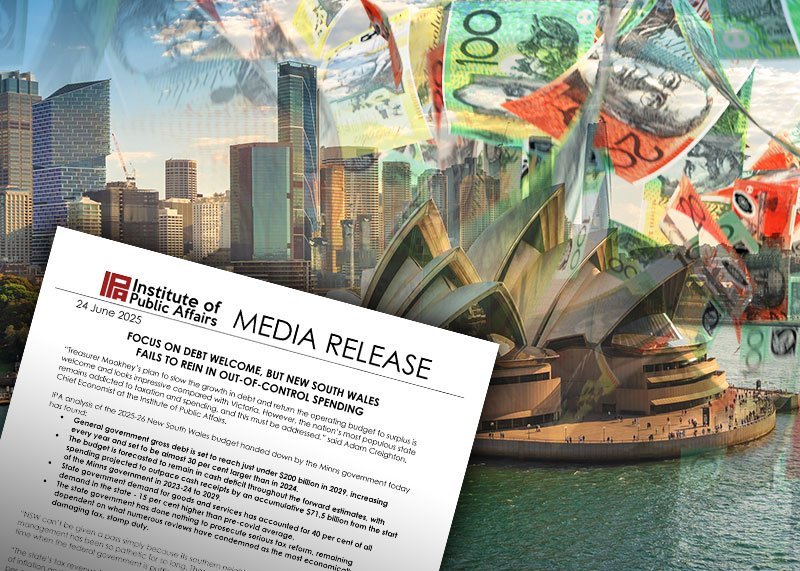
“Treasurer Mookhey’s plan to slow the growth in debt and return the operating budget to surplus is welcome and looks impressive compared with Victoria. However, the nation’s most populous state remains addicted to taxation and spending, and this must be addressed,” said Adam Creighton, Chief Economist at the Institute of Public Affairs.
IPA analysis of the 2025-26 New South Wales budget handed down by the Minns government today has found:
- General government gross debt is set to reach just under $200 billion in 2029, increasing every year and set to be almost 30 per cent larger than in 2024.
- The budget is forecasted to remain in cash deficit throughout the forward estimates, with spending projected to outpace cash receipts by an accumulative $71.5 billion from the start of the Minns government in 2023-24 to 2029.
- State government demand for goods and services has accounted for 40 per cent of all demand in the state – 15 per cent higher than pre-covid average.
- The state government has done nothing to prosecute serious tax reform, remaining dependent on what numerous reviews have condemned as the most economically damaging tax, stamp duty.
“NSW can’t be given a pass simply because its southern neighbour’s fiscal and economic management has been so pathetic for so long. There is no substantial tax reform in the budget, at a time when the federal government is putting tax reform back on the agenda,” Mr Creighton said.
“The state’s tax revenue is predicted to rise almost 6 per cent a year every year to 2029, well ahead of inflation and population growth, yet gross debt is still set to rise to just under $200 billion then, 30 per cent larger than in 2024.”
“In the middle of a housing crisis, the state budget also fails to focus on substantially increasing new housing supply. IPA analysis found that unprecedented migration had caused a housing shortfall of 44,533 homes in NSW between 2022 and 2024.”
“Today, the state’s new dwelling approval rates are down well over 40 per cent since 2017, while immigration is far higher,” Mr Creighton said.
Previous research by the IPA found that government spending at all levels was responsible for 55 per cent of total government spending, and that this, combined with record migration, was keeping the nation out of a technical recession.
“The reliance on the public sector and taxpayer money to drive growth is an unsustainable economic pathway and is one of the major reasons that Australian living standards are slipping away,” Mr Creighton said.
“Now more than ever, it is critical that the state government cut spending and red tape, as well as put policies in place to deliver sustainable economic growth based on increased productivity,”
“We cannot simply spend our way to long-term, sustained economic prosperity. Unprecedented debt levels will have to be serviced and paid off by future generations and it weakens the state and the nation’s ability to deliver infrastructure and services the community expects,” Mr Creighton said.
To download the IPA’s previous research click here.