Key findings
- The Large-scale Renewable Energy Target (LRET) operates as a subsidy scheme by mandating electricity retailers to purchase LGCs from renewable energy producers, guaranteeing a market for renewable energy, and transferring the costs to electricity consumers.
- In 2024, Australian electricity consumers were made to pay $659.7 million in hidden charges on their electricity bills to the 50 largest operating solar generation facilities (solar farms) under the LRET.
- 36 of Australia’s 50 largest solar farms, some 72 per cent, were foreign owned (either fully foreign owned or partially foreign owned). Just 14, or 28 per cent, were entirely Australian owned.
- In 2024, $513.2 million was paid by Australian electricity consumers to solar farms which were foreign owned under the LRET alone.
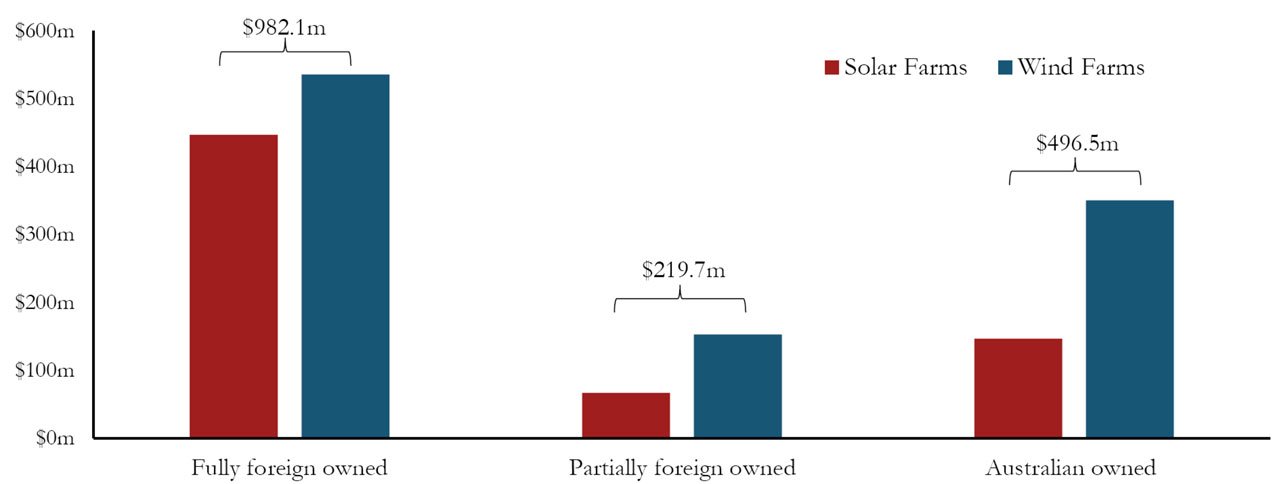
- When added to previous IPA research calculating the effect of the LRET on wind farm operators, $1.7 billion was paid by Australian electricity consumers to the 50 largest operating solar farms and 50 largest operating wind farms in 2024.
- Of the total subsidies paid, $1.2 billion was given to solar and wind farms which were foreign owned.
Figure 1: Large-scale Renewable Energy Target subsidies paid to 50 largest operating wind farms in 2024
Figure 1: LRET subsidies paid to the 50 largest operating solar farms and 50 largest operating wind farms in 2024