
Peta Credlin:
Karalee, as I said, you’ve been here on the programme, I should say, but you’ve had a lot going on at home. You lost your beautiful husband, Peter. We gave him a terrific sendoff on Friday, so we’re delighted to have you back in the chair, mate. It’s so good to have you here.
Karalee Katsambanis:
Thank you.
Peta Credlin:
Let’s start with the AI data breach. Few points I want to note here. This happened in June. PM told on the weekend, but we only learn about it today. The notification about the breach didn’t come from the government, it came from the company and they had to email a public access point or email box to tell us what was happening. I’ll speak to an expert in the moment about what you can do now to turn this around. Surely, Dan, Labour needs that panel of experts to be rapidly reinstated.
Daniel Wild:
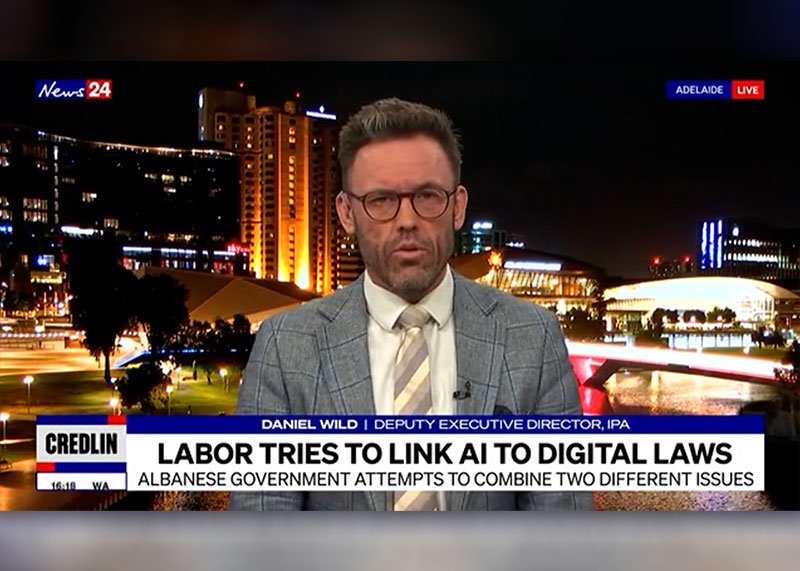
Well, that’s right, Peta. There’s a couple of things here for me. Firstly, the timing of it, as you alluded to in your monologue, has coincided with providing some space for Anthony Albanese’s award. And now because things are going sour, as you know, from your experience in politics, they keep these things in their back pocket and roll it out when they want to change the topic of discussion in the news. Now, I know that sounds cynical, but unfortunately, that’s often why people at home wonder, “Why is this just coming out now?” This is often the reason why. There’s a very strong political reason for it.
The other thing also, as you alluded to, was the government has taken its eye off the ball. When it comes to the internet, when it comes to the online world, they are not focused on things like AI security. They are focused on government censorship of Australians through their Digital Duty of Care legislation. So this is a government that is not focused on the things that matter to our national interest. The other thing I would be very interested in, Peta, is why was that task force that you mentioned, why was it disbanded, I wonder? Was it disbanded because they were providing advice to the prime minister or to his ministers or senior advisors that was inconvenient and they did not want to hear? I wonder if that was one of the reasons.
Peta Credlin:
Well, we’ll ask one of those experts in a moment. My point at the top of the show there about this conflation by the government between appropriate, and I’m saying appropriate, I don’t want big regulation, but appropriate regulation of the AI environment and then Labor’s try on with its Digital Duty of Care, trying to put the two things together when I argue they’re very, very different, Karalee. The debate about censorship, if we don’t have sufficient laws, we’ve already got a range of mechanisms that we can improve, but this is about stopping Australians getting information that will send the prime minister’s personal rating even lower. This is an election strategy. It’s not about keeping people safe or children safe online at all.
Karalee Katsambanis:
It’s not and Australians are being gaslit once again by Anthony Albanese and the Albanese government. The Digital Duty of Care, it’s nothing more than just a political censorship bill. And he’s preying on the fears of parents and other caregivers, and as you say, conflating the two together. This is an extraordinary attack on free speech for Australians, but it’s also extraordinary that this would give the Communications minister completely unfettered power without a parliamentary oversight as to what they deem to be harmful and what they don’t. And I think it’s a bit rich of him to do this.
And as Sarah Henderson pointed out last night, it’s just extraordinary, but the problem is he is relying on merging the two together so that people don’t know what will happen. But it’s really good that you’re pointing it out, because the more that we can point out to the Australian people that the Digital Duty of Care is completely different to AI regulation, the better that it will be. And it’s like communist China. This is not what should be happening in a Western democracy like Australia.
Peta Credlin:
They tried, didn’t they, Dan, during the voice debate to shut us down? I know they tried the IPA to get you offline. They certainly tried a number of times with me about the Uluru statement of the heart, that this would succeed, that move would succeed second time around if they had this legislation in place.
Daniel Wild:
Yeah, that’s right. This is a really good point because as I mentioned the other week or the week before, this is really the third crack that the government has had at trying to do this. They had the misinformation laws back in 2024. They had a crack at some hate speech laws earlier this year. Now, they’re having another crack at it now. Ever since they lost the voice to parliament debate, this government has convinced itself that what they need to do, rather than explaining to people, right? This is the thing about this government, it has never won an argument with the Australian people. It doesn’t take its policies to the people and try to convince them of the legitimacy of those policies.
What it does is it either just shoves it through parliament and guillotine’s debate or it just tries to censor debate and not have a debate whatsoever. And you remember after the voice vote, what did Albanese and the chief campaigners blame? They claimed misinformation. Either you voted no because you’re too dumb or you voted no because you’re a racist, right? That is how this government thinks. They don’t understand. People voted no because they thought it was a bad idea and they didn’t want it. So yeah, the government’s going to try and push ahead with censorship and it would have a massively negative effect on our ability to debate things in this country.
Peta Credlin:
Let’s go to this report today that the Australian Energy Market Operator, AEMO, the regulator, is basically, they’ve got a plan to put the $50 million cost of EV charger rollout onto everyone’s power bill across the country, whether you want an EV charger, whether you have an EV charger or not. Karalee, how can this be justified? We can’t pay our bills as it is.
Karalee Katsambanis:
Well, it’s incredibly unfair and I noticed that Anna Collyer, who’s the chair of the Australian Energy Market Commission, she’s actually said that it would add $1 a year to people’s power bills, average power bills. This is another example of gaslighting. We had this when they introduced the negative gearing things in the budget where they said rents would only rise by $2 a week. That hasn’t worked. This is appalling. This should be an industry thing. It is being run by private enterprise. They’re putting their money. They’re putting their things on the line to do this.
To actually slug the Australian taxpayer because about $20 billion worth is needed for proper infrastructure is just not fair. Australian consumers will be at a disadvantage. And the problem is this all ties into Chris Bowen’s energy plans, et cetera. They just cannot accept that they have not invested properly into infrastructure and now they want to slug the Australian taxpayer with more. I’m really sorry for Anna Collyer to say it would add an extra $1 a year to the average Australian’s power bill is an absolute insult. Poles and wires companies are monopoly and monopolies, we will all be paying the price for that. It’s absolutely appalling.
Peta Credlin:
Dan, a quick one for you. Master Builders today issued a warning that rent increases are driving. These are the ones out of the budget on the back of those tax hikes that are moving the rents obviously, but those rent increases will send more people out of renting properties into social housing. We know of course the clearance rates on the weekend are very, very sluggish. In August, Sydney was at a six-year low in terms of how long properties were sitting there on the market and selling. It begs the question, I can’t get a straight answer out of anyone in Canberra, what actually is the definition of social housing? Is this housing that we’re subsidising as taxpayers? Talk me through what the truth is here.
Daniel Wild:
Well, in essence, yes, that’s what it is. We now have almost a million Australians who are in social housing of some kind. Now two-thirds roughly of that is in housing that is directly run and operated by the government itself. A few percent is in relation to indigenous and then about 25 to 30% is through community organisations, many of whom receive government funding as well. So yes, most of this is taxpayer funded housing that’s then rented off to people who can’t afford or can’t find a rental property. Now, this is one of the great untold stories of the failure of this government’s migration and housing programmes, which is that there’s many people who need social housing.
If it weren’t for social housing, they’d be on the street, but there’s many people who have been forced into social housing because they literally cannot get a rental property. They just can’t get one. So they have to stay with their parents or their grandparents or do whatever they have to do, or if they don’t have that support available, they’ve got to go into a social house. So this is what happens when you have a massive surge in demand that we’ve had from mass migration coupled with a complete failure of supply. And on top of that, as you rightly say, these tax changes mean that fewer people are investing, rents go up even more. So look, unfortunately, more people are going to find themselves in this situation.
Peta Credlin:
And it just grows the state and makes us ever more reliant on government, which is not what we want in a country like Australia. Thank you to you both. As I said, Karalee, great to have you back.
This transcript with Daniel Wild talking on Credlin – News24 from 24 September 2026 has been edited for clarity.
