Chris Smith:
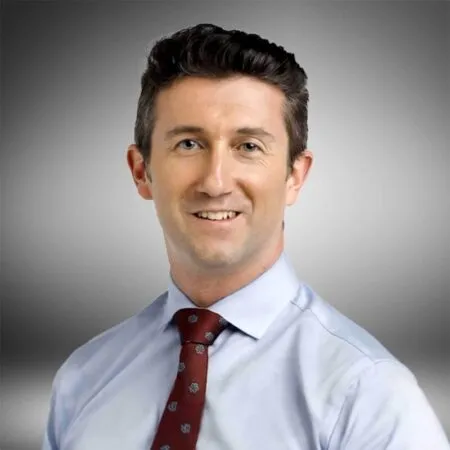
I’ve got a senior fellow from the Institute of Public Affairs, chief economist with the IPA as well, columnist with The Australian newspaper, Adam Creighton, on the line. Good morning to you, Adam.
Adam Creighton:
Good morning, Chris.
Chris Smith:
Okay. I guess I’m asking you to put on your economics hat more than your political hat, but we’ve got some significant changes announced to the NDIS. I wonder whether they could have gone further and means-tested it. He explained that he has a philosophy that everyone should be included in the NDIS. What are your thoughts on what he’s come up with?
Adam Creighton:
Well, look, it’s not too bad, but of course it hasn’t happened yet. I mean, the bottom line is he’s going to try to get the number of people on the NDIS, which of course is about 780,000 people, which is just extraordinary, down to 600,000 over the next few years.
So that’s not going to be easy. You’re actually going to have to kick people off it, which is difficult for governments to do. I mean, in my view, it’s still growing too fast, the cost of the thing. Even with the changes, it’ll be growing five, 6% every year, which [inaudible 00:01:06]-
Chris Smith:
Well, they’re saying 2%. How do you achieve 2%?
Adam Creighton:
Well… Well, well, I don’t think it’s going to happen. I think it’s still going to grow. I mean, of course, right now it’s growing at 10% and has been for years. It’s $55 billion… sorry, $50 billion every year at the moment, the cost of the thing, which is coming up near the defence budget. So it’s extraordinary. But I mean, Mr. Butler, the health minister yesterday basically said a lot of the financial claims made on it have no evidence.
90% of them have no evidence behind them. So I mean, how was it designed like this in the first place? I mean, it’s just appalling that this has been able to go on for so many years. And let’s be frank, this was designed, as I understand it, by one of our flagship economic institutions, the Productivity Commission. And yet it’s got all these holes in it for fraud. I mean, it’s really just an outrage, to be honest.
Chris Smith:
Yeah. He says he doesn’t need to register all of those providers. I would’ve thought if you’re registering providers, it allows you to follow them and put scrutiny on them a little bit more.
Adam Creighton:
Yeah. Look, they should be registered. And I mean, it’s clearly [inaudible 00:02:13]. I mean, I know the… I know our sister Think Tank, the CIS has done some analysis, and they… there’s something like in different parts of Sydney, the number of people who are on the NDIS varies from one in 20 to one in 10. So one in 10 suggests there’s a lot of people on it who don’t need to be on it.
Chris Smith:
Yeah.
Adam Creighton:
And it’s basically being used as a [inaudible 00:02:34]. And you’re right about means testing too. I mean, we means test basically everything in Australia, but bizarrely not this. Why is that? I mean, lots of people think when they think of the NDIS, they think of profoundly disabled people, but that is a tiny fraction of people who are on this. I mean, there’s $12 billion a year spent on cafe visits and going to the movies. I mean, surely that’s excessive. And of course, a lot of those people, let’s be frank, could afford the cafe and could afford the movies.
Chris Smith:
And you’ve got accommodation charges which have gone up per year up to double the amount that they were six years ago.
Adam Creighton:
Yeah.
Chris Smith:
Boy, oh, boy.
Adam Creighton:
No, I mean, I’ve heard anecdotally from doctors in the regions that people with mild, very mild multiple sclerosis, they’re being housed at the cost of $200,000 a year in brand new three-bedroom apartments for one person. I mean, it’s completely over the top basically, massively over the top. And it does have to be reigned in. And let’s see what they do in the budget. But the government’s making the right sounds, but there’s a long way to go yet.
Chris Smith:
Yeah. I tell you what will upset people, and it already has. I’ve had calls on the open line already in the first out of the show, which is basically the removing of about 1.4 million, which the minister says is an overestimate from John Howard’s private health rebate.
This is for the over-65s. Yes, great. The money’s going to be spent on aged care, which needs resourcing, but I’ve got examples already online of people saying, “Well, that’s it for me. I’m out of private health insurance.” So, therefore, we’re going to pay for them anyway because they’ll jump onto Medicare and be a greater burden.
Adam Creighton:
Yeah. Look, that’s true. I mean, I think the government says about 50,000 people are going to stop paying for private health insurance in that over-65 group. I mean, look, I’ve got mixed views about this. I mean, I’d rather there not be any rebate at all for anyone because it’d save a lot of money, and we could pay less tax. But there is a rebate, and I certainly understand that people have their noses out of joint. It’s been around for 21 years, I think, or 19 years, a long time.
So it’s been very established. The government says it’s going to make the rebate the same for everyone regardless of age. But certainly I can see if you’ve had something for many, many years and then, suddenly, it’s taken away from you, you’d rightly be furious, especially when you see in the media the massive waste on the bureaucracy and salaries and all this other stuff, you’d be angry about it. And I understand that, but generally it’s good that the government’s trying in some ways to reduce its spending.
Chris Smith:
Yeah. Let’s talk fuel. Now, The Australian is reporting today that it’s been told the government may fund a feasibility study from the budget to assess the viability of building a new fuel refinery. Are we wishfully thinking, or has the government lost its fossil-fuel phobia?
Adam Creighton:
Well, look, it’s quite funny. I did laugh when you said feasibility study, because they tend to cost about a billion dollars these days-
Chris Smith:
Yes.
Adam Creighton:
… just to do a report. So look, hopefully we’ll have a report before five years goes by. Sorry, I’m just… I’m being facetious.
Chris Smith:
You’re right. We don’t need a feasibility study. Look around you.
Adam Creighton:
[inaudible 00:05:44]. I know. Well, we had eight 15 years ago, so there’s obviously some sites that could be used. So look, I mean, I think they should get cracking on this. And I understand there is… there’s going to be some sort of subsidy. But the reality is, even for free market people like us at the IPA, I mean, there’s got to be some things that are nationally very important, such as defence, which the government has to do.
And you can say fuel security is more or less related to defence. In a crisis, in some sort of war, God forbid, you do need fuel security. So there’s going to have to be a subsidy. These things cost eight to $10 billion, apparently, so the government’s going to have to chip in some of that. And look, but frankly, this should have been done years ago. We shouldn’t have closed them in the first place.
Chris Smith:
No. Well, it was the Prime Minister in 2020, and I played the audio grab last week of he was saying then we should be having 90 days storage on fuel.
Adam Creighton:
Yes, exactly.
Chris Smith:
Six years later, he’s doing something towards that, something vaguely related to that. But reality always trumps ideology, Adam.
Adam Creighton:
Yes, that’s right. I mean, one good sign with this is that the opposition is supporting it. So look, it may actually happen. So fingers crossed, we get a third, we increase our capacity by 50%.
Chris Smith:
What is your reading of what’s happening on the [inaudible 00:07:04] in the Strait of Hormuz? Iran, I think, has got Trump over a barrel with this ceasefire, and I don’t think he’s got the appetite to restart this war despite what he says.
Adam Creighton:
Yeah. Look, I think so too. I mean, of course, the usual fog of war, it’s very hard to know what’s going on, but you’ve got different news agencies saying different things from different countries and leaks all over the place, of course. But I tend to agree. I mean, it seems that Iran’s not playing ball with the US at the moment, and they’ve said so explicitly.
And I think just this morning, they’ve seized three ships or shot at three ships in the Strait, which they’re not supposed to be doing. And the US, of course, is still blockading Iranian ports, and Iran says it’s not going to negotiate until that’s lifted. So, so far, they’re not doing what the US wants. So this can only go on for some time. I mean, I know the oil price this morning’s back above 100 US dollars a barrel, so that’s going to cause a lot of pain.
And remember the midterm elections, they’re getting closer in the US in November, and you’re going to have a lot of Republican senators and Congressmen knocking on the White House’s door saying, “For God’s sake, end this, or we’ll lose our seats.” So that’s going to be a big pressure on the US, and obviously, Iran knows that.
Chris Smith:
Yeah, very much so. Great, Adam, thank you very much for being part-
Adam Creighton:
Thanks.
Chris Smith:
… of the programme today.
Adam Creighton:
Thanks, Chris. Enjoyed it.
Chris Smith:
Good on you. Adam Creighton, senior fellow at the Institute of Public Affairs, their chief economist, and of course, a columnist with The Australian newspaper.
This transcript of Adam Creighton on Mornings with Chris Smith 2SM from 23 April 2026 has been edited for clarity.