
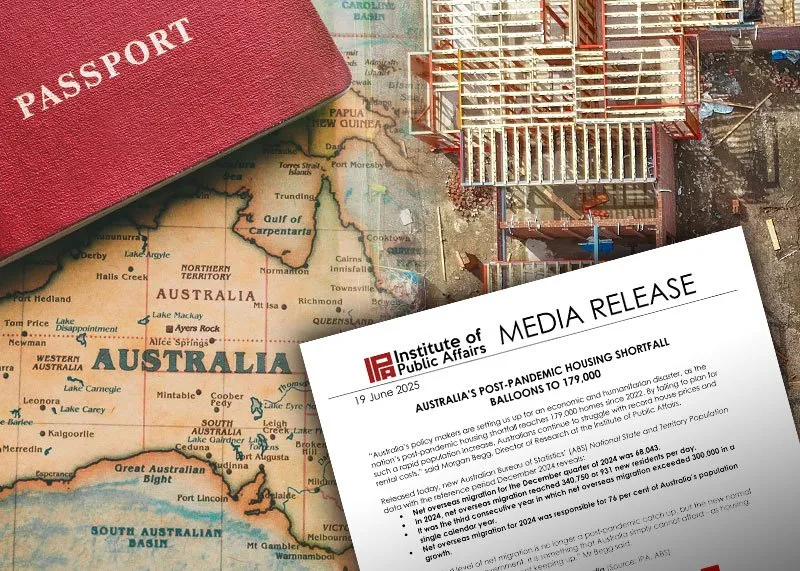
“Australia’s policy makers are setting us up for an economic and humanitarian disaster, as the nation’s post-pandemic housing shortfall reaches 179,000 homes since 2022. By failing to plan for such a rapid population increase, Australians continue to struggle with record house prices and rental costs,” said Morgan Begg, Director of Research at the Institute of Public Affairs.
Released today, new Australian Bureau of Statistics’ (ABS) National State and Territory Population data with the reference period December 2024 reveals:
- Net overseas migration for the December quarter of 2024 was 68,043.
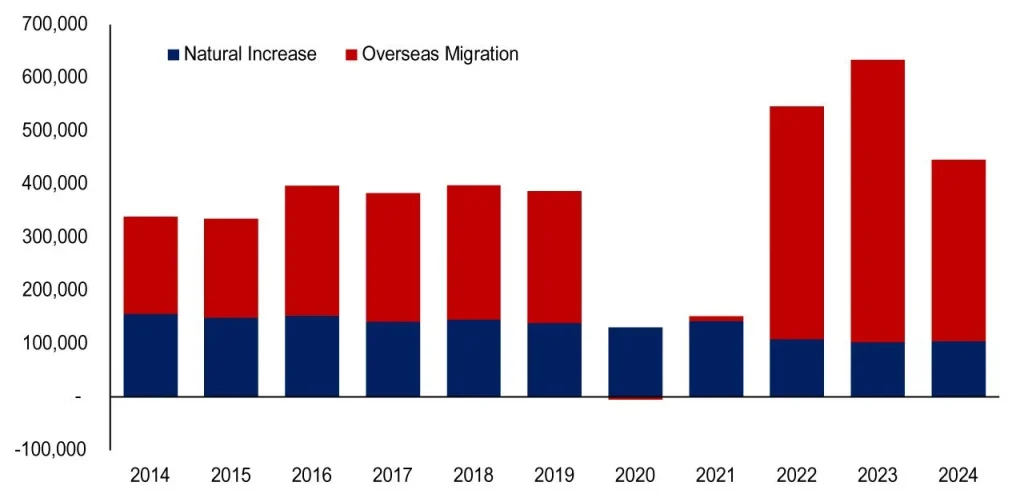
- In 2024, net overseas migration reached 340,750 or 931 new residents per day.
- It was the third consecutive year in which net overseas migration exceeded 300,000 in a single calendar year.
- Net overseas migration for 2024 was responsible for 76 per cent of Australia’s population growth.
“The elevated level of net migration is no longer a post-pandemic catch up, but the new normal under the Albanese government. It is something that Australia simply cannot afford – as housing, infrastructure, and services are not keeping up,” Mr Begg said.
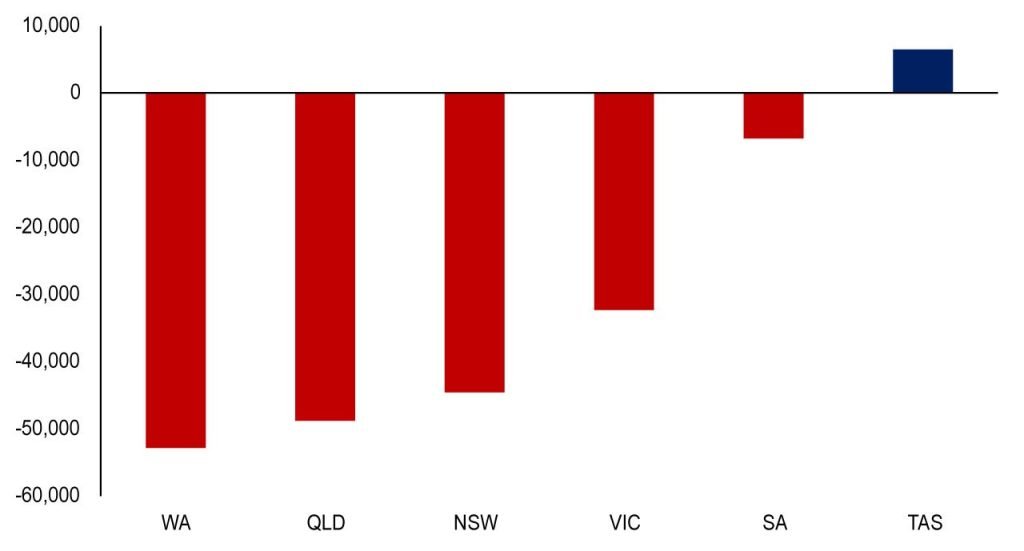
Coinciding with the release of the ABS figures, new research by the IPA has found that between 2022 and 2024, accumulated shortfalls in housing supply in Australia is estimated to have totalled 179,287. In this period, the research also shows on a state-by-state level:
- Western Australia’s net housing supply shortfall is estimated to be 52,783 homes.
- Queensland’s net housing supply shortfall is estimated to be 48,737 homes.
- New South Wales net housing supply shortfall is estimated to be 44,533 homes.
- Victoria’s net housing supply shortfall is estimated to be 32,244 homes.
- South Australia’s net housing supply shortfall is estimated to be 6,732 homes.
Bucking the trend was Tasmania as high levels of interstate departures and low birth rates are expected to result in a net housing surplus of 6,541 homes.
“Migration has, and will continue to be, an important part of Australia’s national story. But it cannot be denied that our unprecedented migration intake is far in front of the number of houses being built. It is putting the great Australian dream of home ownership further out of reach,” Mr Begg said.
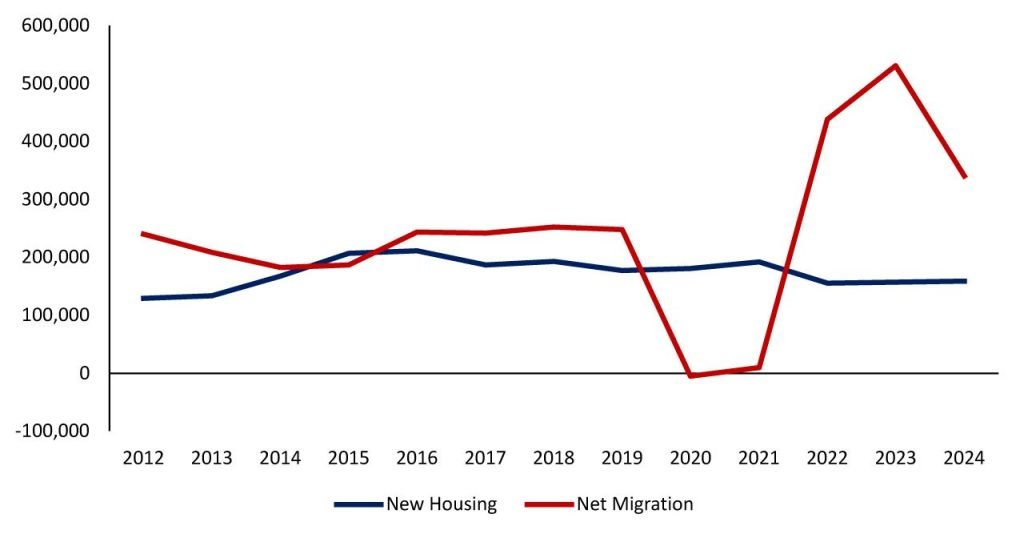
“Today’s figures reinforce the depth of Australia’s housing crisis, brought about by out-of-control migration, a construction sector burdened by red tape, and competition for resources from large, expensive, and inefficient taxpayer-funded construction projects,” Mr Begg said.
“The federal government’s inability to rein in Australia’s unsustainable migration program has meant that the dream of owning a home has become much more difficult, fuelling a perfect storm of high inflation, rising house and rent prices, and a negative per capita economic growth.”
“A sustainable migration strategy must be planned for, have the consent of the community, and not overstretch critical social infrastructure like housing, schools, roads, and hospitals. The federal government’s migration program continues to fail on all three counts,” Mr Begg said.
To download the IPA’s previous research click here.
