
Rita Panahi:
Joining me now is News Corp senior writer Patrick Carlyon, and IPA chief economist, Adam Creighton.
Adam, this is a mess and we could see people’s home values devalued further if we have another rate hike this year.
Adam Creighton:
Yeah, certainly that’s true. I mean, certainly if you’ve just bought, you’d be very worried if you had this enormous mortgage and the prices are falling. I mean, the nominal falls don’t even go to the full picture. I mean, you said Melbourne’s worth less than five years ago. That’s the nominal price. There’s been 25% inflation over that period. So actually, they’re down 25%-
Patrick Carlyon:
Good point.
Adam Creighton:
… in real terms, and so are many, many houses. So it’s-
Rita Panahi:
That’s frightening.
Adam Creighton:
… actually worse, right? It is frightening. Those tax changes could not have come at a worse time. As you say, we had a series of rate rises. There’s probably going to be another one. And also the population growth is probably going to fall quite a bit if the impact of One Nation is felt federally, and it’s going to be. So you’ve got this triple whammy, taxes, rates, and fewer people. I think it’s going to be pretty scary over the next three years. I wouldn’t be buying a place right now. I wouldn’t be leveraging up. I wouldn’t be taking the 5% deposit scheme if I was anyone.
Patrick Carlyon:
No.
Rita Panahi:
And first home buyers are choosing not to enter this depressed market because there’s not confidence in the housing market, Patrick. And there’s a real split that’s emerged, but the overwhelming majority of Australians, according to yesterday’s news poll, don’t want to see house prices drop. I think two in three said they want to see house prices increase over the next two years or remain stable. And yet the Albanese government is almost trumpeting its achievement in crashing the housing sector.
Patrick Carlyon:
Well, property prices have a direct bearing on confidence and spending. So there’s this flow on effect. And I mean, you look at Melbourne, I mean five years, as you point out, Adam, it’s a very good point, homeowners have lost money in Melbourne in effect over five years. You throw these tax changes in, there is no confidence in the market. And first home buyers, they were the ones who were meant to benefit from this, they’re standing back because they’re scared to buy something that’s going to be worth 100, 200 grand less than it was when they buy them.
Rita Panahi:
Well, because they’re typically mortgaged up to the eyeballs. They don’t have much in the way of a deposit. So the housing market going backwards impacts them even more than the average mortgage holder.
Adam Creighton:
Yeah. And certainly their confidence would be too. I mean, you’d be so depressed, wouldn’t you, if you just borrowed 95% of the value of your home using the government scheme and now it’s worth $100,000 less and you’re stuck with this for the next 30 years. But look, just for viewers at home who are panicking, look, you can’t extrapolate these falls in one month to the rest of the year because if the stock market fell 1% [inaudible 00:02:46].
Patrick Carlyon:
You can in Melbourne.
Adam Creighton:
Maybe you can in Melbourne. So it might not be diabolical, but look, it’s not looking good.
Rita Panahi:
It’s certainly not looking good. And construction firms in New South Wales are collapsing at record rates, with 1500 companies falling into insolvency in the last financial year. Comes amid revelations the state will fail to meet its national housing accord deadline by three years. Patrick, since the housing accords were established in 2024 with a goal of 1.2 million homes built across the country by 2029, 7,779 developers nationwide have called it quits.
Patrick Carlyon:
Yes.
Rita Panahi:
I mean, that’s an alarming figure. And you would think these budget changes that we saw in May would be a boom for the construction sector because all the tax breaks go to new builds. But no, they’re suffering as well.
Patrick Carlyon:
But the budget is all about unintended consequences, isn’t it? And this is another sort of unintended consequence. How many developers are there in Australia? I mean 7,000 sounds like an awful lot. Developers can’t make it work obviously. And these goals, these targets, I mean they’re pie in the sky at this stage, aren’t they? These homes are not going to be built. There’s going to be this great demand. And at the same time you’ve got this paradox with the softening property prices. It is a real perfect storm.
Rita Panahi:
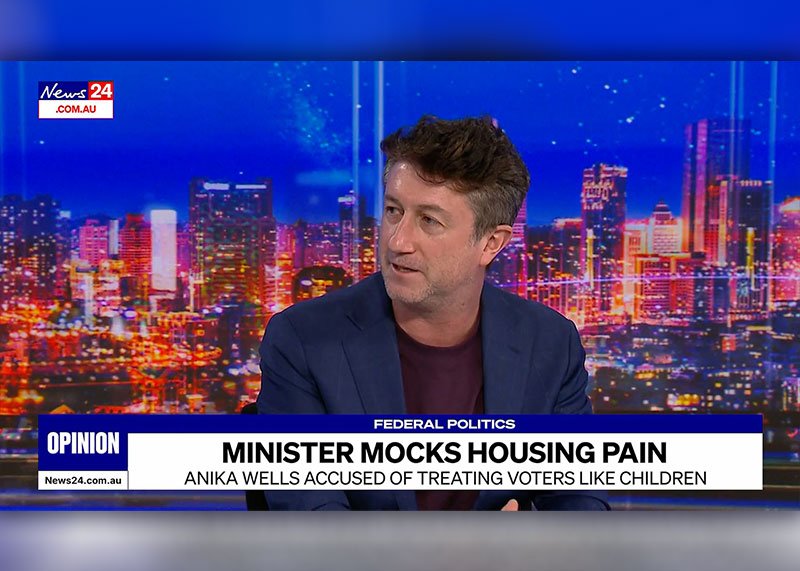
Meanwhile, we’ve got Cabinet Minister Anika Wells, well, she’s being ridiculed online for using Ooshies to spook Labor’s contentious housing tax changes. Have a look.
Anika Wells:
What do these guys and the Australian housing market have in common? Both the Ooshie market and the Australian housing market are dictated by supply and demand. The problem right now is that supply of Ooshies and supply of housing is not keeping pace with demand. How do we fix it? To fix the Ooshie crisis, Woollies has the ability to deliver Ooshie equilibrium whereby Ooshie supply meets the relentless demand of Aussie youths. That’s pretty easy. Woolworths, the bull is in your court. For the last 15 years, housing demand outpaced housing supply, or in other words, there’s been a shortage of Ooshies.
Rita Panahi:
Adam, it only gets worse. She’s so boldly ignorant, so economically illiterate. She thinks that removing investors from the market will somehow incentivize greater supply. Really, it’s hard to figure out where she’s going with that.
Adam Creighton:
I mean, I really think she should have been skiing that week. It would’ve been far more advisable if that had been the case.
Rita Panahi:
You know what? Let’s put our tax dollars together and send her on another junket because I think I prefer her on junkets than doing that.
Adam Creighton:
Just broadly the embarrassment of a senior cabinet minister talking like that to voters. I mean, I spent three and a half years in the US. I can’t imagine any secretary in the US government ever doing anything so stupid like that. And as you say, it doesn’t even make sense, but to me it’s just degrading. I noticed Advance did a fun spoof where they changed the words and they made it about immigration and [inaudible 00:05:56]. Oh, really? Sorry.
Rita Panahi:
We’ll play a little bit of it.
Adam Creighton:
Yeah, look, I don’t think it helps labour, but it obviously shows the contempt that they hold the average person’s intelligence.
Patrick Carlyon:
Yes.
Rita Panahi:
Patrick, why do these very unimpressive politicians speak to us like we’re in kindergarten? I don’t know where that comes from, whether they think it’s soothing and impressive in some way, but I’ve got to say it’s very irritating.
Patrick Carlyon:
It’s condescending, isn’t it? And I mean, we talk about it virtually every week. There’s a latest post from a government minister. They look like they’re trying to be 20 years younger than they are. It’s embarrassing. It doesn’t actually illuminate anything. And this is probably the single worst example. And the one good thing about this is universally the media has condemned this for what it is. I mean, no one’s defending it.
Rita Panahi:
No. And you mentioned Advance. They did do a bit of a spoof of it. Let’s have a look.
Anika Wells:
What do these guys and the Australian housing market have in common? Supply and demand. The problem right now is that supply of Ooshies and supply of housing is not keeping pace with demand. How do we fix it?
Rita Panahi:
Yes. It’s easy to mock, really. It’s easy to spoof that.
Adam Creighton:
Yeah. Yes, extremely. I mean, I’m sure there should be more. No, but it’s good. I think she probably regrets it.
Rita Panahi:
I think she regrets it, but only because of the mockery. I don’t think she thinks she did anything wrong. Now, One Nation is continuously criticised by its political opponents for lack of policy detail, but Adam, you have looked into this issue and specifically the allocation of personal staff to parties and party leaders. And this allocation, many will be surprised to know, is at Anthony Albanese’s discretion and it is outrageously biassed against One Nation, Adam.
Adam Creighton:
No, the figures are just extraordinary. These personal positions, there’s many hundreds of them. They’re very highly paid. Typically ministers get them, but they do generally give them to the opposition. Also minor parties too. The government with 492 just itself. And mind you, it has 220,000 bureaucrats as well. These are just the-
Rita Panahi:
Yeah. Don’t forget the hundreds of thousands of bureaucrats.
Adam Creighton:
… these are just the personal advisors, comms, policies, spin doctors. And One Nation has four in total and the Greens have 17. And okay, they have a few more members in the Senate, that’s true. But when you do the ratios, it’s very clear that One Nation has been punished by the Prime Minister.
Rita Panahi:
One Nation has four.
Adam Creighton:
Yeah, four. Four. I know.
Rita Panahi:
And this is a party that is leading the polls. They’re ahead of Labour. But if you just even work it out on the current members they have in parliament, the ratio is really quite unfair, Patrick.
Patrick Carlyon:
And the system can’t be where the Prime Minister has that discretion to actually choose. It looks bad. It makes him look bad. It should actually be outsourced to something independent and it should be reviewed. I mean, One Nation has exploded in the last 6, 12 months. They deserve more staff, obviously.
Rita Panahi:
Absolutely. They’re the alternative government. They’re the leading opposition party. And Pauline Hanson responded to your tweet, Adam. She provided this graph, which again shows how One Nation is being screwed. And she also said, “The Prime Minister should not get to determine the number of staff available to his political opponents, especially while his government enjoys 507 advisors on top of 200,000 public servants.” Oh goodness me. It does seem like a misuse of power this Adam.
Adam Creighton:
Yes. Look extraordinary. I mean, I think traditionally prime ministers have exercised some sort of restraint here because there has been a rule in the past, I think going back to Paul Keating, that the government got 80% or actually 79, I think, and everyone else got 21%. But the way that 21% has been allocated here is obviously discriminating against One Nation. My argument is actually the opposition of parties in general need these staff more than the government does because the government has full huge departments, huge [inaudible 00:10:02] to answer their questions. So they really don’t need as many, but they have them of course, because it’s all about power and staff and travel and rewarding mates. Let’s be frank, that’s what all these jobs are about.
Rita Panahi:
Mates and often family members. Incredible how many family members are installed into these positions.
Now, Michelle Rowland earlier today defended the Prime Minister’s comments about One Nation and its supporters. And Pauline Hanson was none to police for that. She has called for the Attorney General to retract her comments and apologise for slandering her party and its supporters. She said, “Millions of Australians support One Nation. They are not extremists. They are not dangerous. And ministers should not use language that encourages others to treat them as if they are. No minister, especially the Attorney General and first law officer of the country, should suggest there is any justification for threats against Australians because of the political party they support. Labour should be asking why Australians are abandoning them for One Nation, not demonising those Australians for how they vote and putting them in danger.”
This was a big topic of discussion yesterday, Patrick. One Nation came out hard against the Prime Minister and the treasurer for their commentary. And I’ve got to say the Prime Minister sounded desperate suggesting that people are supporting One Nation because they’re falling for misinformation and disinformation.
Patrick Carlyon:
Do you really want to alienate voters by telling them that they’re getting it wrong? Look, the Prime Minister did that on Sunday. I think it was a very bad tactic. And to have it doubled down today by the Attorney General is just making it worse. Are you telling voters that they’re silly? These are the voters that they need to get back.
Rita Panahi:
It’s precisely what they did during the voice campaign suggesting that people were falling for disinformation or they were just mean. They were just nasty and bitter.
Adam Creighton:
Just very briefly, I think the word misinformation, disinformation, ever since COVID, ever since so much of the so-called misinformation was shown to actually be correct, I don’t think these words work anymore. I think people laugh at when things are called that and they think, “Oh, well, if you’re calling it that, it’s probably true.”
Rita Panahi:
Particularly from a prime minister with a proven track record of a lying from everything from the Melon-gate to falling off a stage to not axing negative gearing capital gains tax. And of course, remember those energy bills that were supposed to go down?
Adam Creighton:
Yes, yes.
Rita Panahi:
They never have. Gentlemen, thank you so much for your time.
Adam Creighton:
Thanks, Rita.
This transcript with Adam Creighton talking on The Rita Panahi Show News24 from 1 September 2026 has been edited for clarity.
