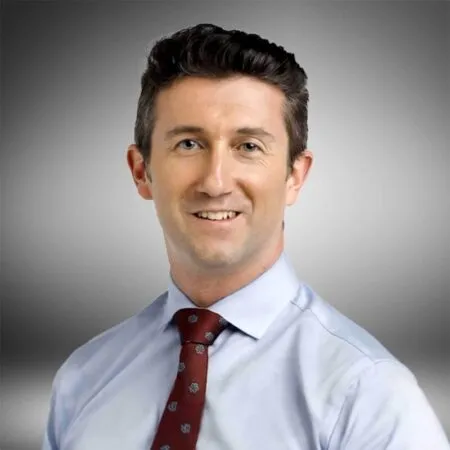
Gabriella Power:
Joining us now is Adam Creighton, chief economist and senior research fellow at the Institute of Public Affairs. Adam, it’s great to see you. I want to get into the war in the Middle East in a moment, but I want to talk to you about this alleged ISIS-inspired bomb threat rocking New York City. Two men, allegedly inspired by ISIS, tried to set off homemade bombs. They have now been charged. One suspect allegedly shouted Allah Akbar before throwing the IED, but just watching how this story has been covered by the media. I mean, you wouldn’t know a thing about these people. In fact, you might even get the impression that these bombs were placed by white supremacists because these bombs, they were allegedly thrown at a protest that was organised by right-wing activist Jake Lang that was anti-Islam. Just looking at the media, NBC posted on X, “Multiple arrests made after suspicious devices found outside Gracie Mansion, home of Mayor Zohran Mamdani during anti-Islam rally and counter protest.” AP had a similar headline as well. And it just kind of implies that the right-wing protestors could have been the ones throwing these bombs at him.
Adam Creighton:
Yeah, certainly. That’s no surprise to me. Obviously, I was in the US for four years, and I watched the US mainstream media a great deal, and they are extremely biassed against Donald Trump. So this is no surprise to me. It’s a really shocking turn of events. There could have been many, many deaths here. I think three bombs were thrown. They could have killed many people. I believe one of the suspects was asked while he was taken away what he intended, and he said that he wanted it to be much, much worse than the Boston Marathon bombing of a few years back.
Gabriella Power:
Wow.
Adam Creighton:
So that is rather terrifying. But the extraordinary thing too is the mayor of New York, the new mayor, Mamdani, I mean, he basically condemned the original protest more than the bomb throwers in a tweet, which is quite extraordinary because it’s worth dwelling on the so-called Nazi protests. I think there are only 20 or so people there protesting fairly peacefully. Of course, we don’t agree with their message, obviously-
Gabriella Power:
Of course.
Adam Creighton:
… but they were not doing anything that was illegal. And indeed, in the US, speech is very free, and there are Supreme Court cases going back to 1969, the Brandenburg case, and to 1977, the Skokie case, that actually spell out very clearly that it is perfectly okay for white supremacists or Ku Klux Klan members to protest peacefully. So it was legal. What is not legal, of course, is throwing bombs that are meant to blow many people up, and that barely got a mention in the mayor’s tweet.
Gabriella Power:
You’re exactly right. We’ve got this tweet. He wrote, “Yesterday, white supremacist Jake Lang organised a protest outside Gracie Mansion, rooted in bigotry and racism. Such hate has no place in New York City. It is an affront to our city’s values and the unity that defines who we are. What followed was even more disturbing. Violence at a protest is never acceptable. The attempt to use an explosive device and hurt others is not only criminal, it is reprehensible and the antithesis of who we are. I want to thank the brave men and women of the New York Police Department who acted quickly to keep New Yorkers safe.” I mean, no mention there at all about… He’s happy to call out Jake Lang by name, calling him out as a white supremacist, but not a word about who these people were that allegedly threw this bomb, who the suspects were, and of course, we know were allegedly, I should say, inspired by ISIS. I mean, as if that’s important, Adam.
Adam Creighton:
No. Look, certainly, there’s an irony, too. I believe the protests… I’m not even sure that they were white supremacists. The media, of course, likes to use that phrase for anything they don’t like. I think they were protesting against Islamic extremism, and it’s somewhat ironic that they had bombs thrown at them by extremists by exactly that.
Gabriella Power:
Yeah.
Adam Creighton:
So I mean, it kind of proved their point in a way. But the worrying thing is these were just two teenage boys, I believe, or teenage men just finished high school. They had no criminal record, and they had been inspired. They even said, they told reporters, I believe, that they were inspired by ISIS. So it’s a very warring turn of events, and there could be many more cases like this in the US. Let’s hope that there aren’t.
Gabriella Power:
Let’s hope that there aren’t, but of course, we know in Australia there was an ISIS-inspired, alleged terror attack just a few months ago. It’s so concerning and it’s really up to leaders to call this out for what it is.
And also, just while we’re on Mamdani, there are reports that Mamdani’s wife liked an Instagram post calling the sexual violence on October 7 a hoax and referred to the terror attack as a collective liberation. Mamdani not apologising on his wife’s behalf either, just saying that she’s a private person.
Adam, I want to move on to what is happening with Iran. The son of the late Ayatollah Ali Khamenei, Mojtaba Khamenei has been appointed supreme leader. US President Donald Trump has called him unacceptable, telling Axios that we want someone that will bring harmony and peace to Iran. Look, everyone wants to know what the outcome’s going to be. Obviously, Donald Trump has taken a huge gamble, but hopefully be high reward. What do you make of this new supreme leader, and is he going to last long?
Adam Creighton:
Yeah. Well, look, I mean, there’s so much to say here. I mean, in terms of the new leader, look, it’s hard to know what he’s going to be like. I had never heard of him. I didn’t even know the late Ayatollah had children. I thought it was my understanding that the late Ayatollah did not want his children to take over from him because he did not want it to be a monarchy, but it seems to be that’s the way that it is going. Of course, there’s also been reports that he’s been seriously wounded, the new leader. So we don’t know how seriously wounded.
Look, I think it was a mistake for the leadership in Tehran to choose the son of the late leader. It makes it look more like a monarchy. It makes it look more like the regime of Shahs that they overthrew in 1979. So I don’t see how that’s going to endear themselves to the populist, to create a monarchy. There must have been lots of other people that would do the job. But of course, the more serious point is, this is really not what the US wants. I think Donald Trump himself has said that. They’d like someone totally different. They would like someone like they have in Venezuela who is easier to work with, who will be sympathetic to the US. It doesn’t seem like that is the case so far.
Certainly, the whole war has been a very big gamble, as you said. Look, I think it’s too early to say whether it has paid off or not. And of course, the first casualty in war is truth, so we don’t really know what is happening. I must say, I kind of look at all different news outlets. I look foreign outlets, domestic outlets. It’s very hard sometimes to piece together what is actually happening, but of course, governments on both sides tell the media things that aren’t entirely true, and the media, in good faith, reports them. So you don’t really know.
But we do know that the oil price has come through the roof. That’s a fact for sure. And thankfully, it’s come off a bit in the last day or two or just overnight, in fact, when Donald Trump said he thinks the war’s almost over. But then other people in the administration say it’s not almost over. Certainly, Iran says it’s not over and they have a vote in this presumably. So look, we have to wait and see.
Gabriella Power:
But it’s just amazing to listen to the noise around this war. People are asking, “Is it almost over?” It’s been one week. We’re only eight days in, and there’s no patience with this war. Is it coming to an end? Is it going to be soon? Obviously, the president says that this is going to be short-term and I believe that he does want this to be short-term, but of course, wants it to be successful. The president provided an update on a situation in the Middle East just a short time ago, reminding the world that what he’s doing right now is he’s keeping his promises.
Donald Trump:
On the very first day I came down the escalator in 2015, I said, “I will stop Iran from getting nuclear weapons,” and all I’m doing is keeping my promise. Think of that. That was in 2015. I said it. It was a threat then and a much bigger threat now, but no longer a threat, not for a long time anyway.
Gabriella Power:
And Adam, just to pick up on something you mentioned earlier – the oil prices. Now, Donald Trump said over the weekend that the increase in oil, it’s a very small price to pay for safety and peace amid this conflict. He posted on Truth Social, “Short-term oil prices, which will drop rapidly when the destruction of the Iran nuclear threat is over, is a very small price to pay for USA and world safety and peace. Only fools would think differently.” And I think he’s really got a bit of a point there really when we are so blessed really here in Australia we are seeing that the oil prices go up. Men and women are bravely at war trying to defend really Western civilization and taking out this evil threat, and we’re worried about the oil.
Adam Creighton:
Yeah, look, I think you’re right. I think it’s a very small price to pay if the war only lasts a few weeks. The oil price has come down, as you said. It went through a hundred US dollars a barrel. The last time I checked a few hours ago, it was about 90. That’s still very high though. It was basically averaging about 65, $70 a barrel for most of this year so far for the last six months or so. So that’s about 20-US dollar increase if it stays where it is.
The worry, I think, for policymakers in the US and especially Australia where the impact of the oil price is even greater on inflation is that inflation rate. I mean, it’s almost certain in Australia that the inflation rate now will go through 4%. I think that’s a near certainty. It’s 3.8 now, as you know. 4% is very embarrassing. It’s going to mean the RBA has to put up rates. And in the US too, I mean, it’s not quite as affected as us by the oil price, because of course, they have their own oil and they’re also massively increasing production in the US. We’re not, of course. We don’t really have any oil production. We’re completely dependent on oil imports for 90%. So the inflation rate is a concern, but if it does return to normal levels in a few weeks, it won’t be a huge hit.
The issue is what sort of economic pain can the regime in Tehran inflict on the US? And we still don’t really know. We don’t know how many missiles they have. I mean, the fog of war is very, very thick. So let’s hope the US is right. I really hope the regime falls and it falls soon. I mean, that’s probably… If someone forced me to bet, that’s what I’d say will happen in the next couple of weeks. The regime through back channels will basically ask for an off-ramp so they can stay in power and the war can end, because they don’t want to see the destruction of their country. The US is very capable of doing that. But then on the other hand, there’s great cost for the US, too. Their missiles are millions of dollars each. I think the Iranian ones are very cheap, and we don’t know how many they have in storage.
Gabriella Power:
I mean, that is so extraordinary if in just a few weeks, we’ll be able to see regime change. Just going back to your point when you were talking about inflation here and what we could potentially be up for here in Australia, listening to our leaders, it kind of reminds me of the COVID era. “Don’t panic buy. Don’t travel. It’s going to get worse before it gets better.” Obviously, a very different situation, but you mentioned those fears around inflation that it could get as high as 5%. I mean, how much is that really going to hurt us?
Adam Creighton:
Yeah. Well, look, I’m shocked actually to see market pricing just this morning. The chance of a rate increase next week or the week after, whenever the meeting is, is only 40%. I mean, I would’ve thought it’d be almost 100%. I mean, it’s a very bad look for the RBA, I would say. This is a slightly different subject, but I mean, they’re meant to keep inflation between two and three. It’s now 3.8%, and if their forecasts are true, the current RBA forecast, it will be outside that band for seven years. So they’re not really doing a very good job at keeping it within two and three. So if they want to have any credibility, they’re going to have to put up rates, and of course, that’s bad for the economy. It’s bad in the lead up to the budget for the government, because that’s going to put up all the interest costs of that trillion-dollar debt that we’ve been talking about before. The national growth figures will slow almost certainly. That’s what happens when the oil price goes up. So there’s lots of negative consequences.
And as for the government saying, “Don’t panic,” well, what do they know? They wouldn’t have a clue about the future. I mean, we saw through COVID, things can get much worse. The official forecasts are always wrong. Chris Bowen has no idea about what’s going to happen in the war. So it’s understandable he says that, but if I was someone who was very dependent on oil for my business, then I probably would rush out and buy a lot.
Gabriella Power:
No, you’re absolutely right. Adam Creighton, chief economist and senior research fellow at the Institute of Public Affairs, thank you so much for joining us. Great to speak with you.
Adam Creighton:
Thanks, Gab.
This transcript of Adam Creighton on The Power Hour Sky News Australia from 10 March 2026 has been edited for clarity.