
Danica De Giorgio:
Well, Labor’s disastrous budget has turned into the butt of all jokes as Aussies turned their backs on the government.
MUSIC:
The hills are alive with the sound of Albo’s bull(beep) with slogans that echo all day long
Danica De Giorgio:
Yeah, Labor’s budget is more like the sound of mucus. It’s a shocker. Labour tried to appeal to a young generation through intergenerational equity and tax changes, and it backfired.
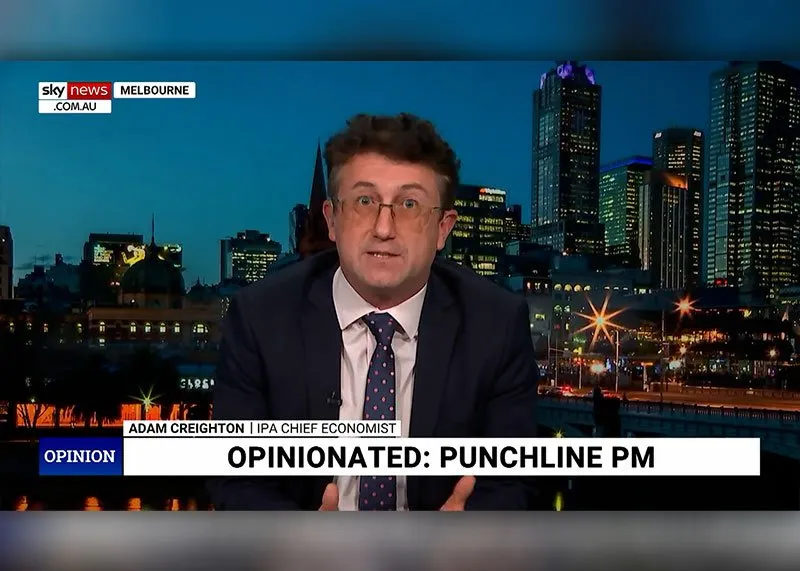
Chief Economist at the Institute of Public Affairs, Adam Creighton, breaks down what it really means for the great Aussie dream of homeownership.
Adam Creighton:
Since the federal budget, you’ve probably heard lots about the government trying to get every worker to be able to afford to buy a home. Now, this is a nice idea, but it’s highly unrealistic, and increasing capital gains tax is unlikely to make much of a difference at all.
Now, however supposedly unaffordable dwellings have become, it’s true that homeownership in Australia remains at very high levels compared both with other countries and also our own history. It’s striking that for all the massive increase in the price of dwellings according to various measures, and also radical changes in taxation and regulation over many decades, the fact is that the headline homeownership rate in Australia remains about 66%. And this is little down from the postwar peak of 71% that was reached in 1966. And of course, before the Second World War, barely half of Australian households owned a home.
Now, tax regimes in Canada, the US, and the UK, they all differ significantly in many ways, yet homeownership in these countries is also about 66%. And then we look at New Zealand, where there’s no capital gains tax at all, and lo and behold, it has the same homeownership rate as Australia.
Now, all this suggests that the government’s plan to impose a minimum 30% tax on real capital gains won’t shift the ownership dial at all, but it certainly will sadly undermine saving opportunities, and especially saving opportunities for the group that the budget is supposed to help, and that is the young.
Now, widespread homeownership alone is hardly proof of prosperity. For instance, Romania and Slovakia, and indeed much of former communist Eastern Europe, they all have vastly higher homeownership rates than Australia, yet few of us would suggest that those countries are richer than us. Indeed, arguably the richest OECD nation of all, Switzerland, in that country homeownership is below 50%.
It’s certainly true that homeownership rates amongst those age 25 to 34 have declined from around 63% to 41%, but that’s still surprisingly high, I think, given the vastly increased range of spending opportunities that people have today. So you often hear about complaints from boomers saying that people are spending on avocado on toast or too many holidays, but the fact is in the 1960s there simply weren’t those opportunities available in the first place.
Yes, it’s true that homes have become more expensive, especially detached dwellings, but they are typically bigger than they used to be built generations ago. And also the nation’s supply of desirable land is fixed, and that just makes it scarcer and more expensive as the population grows. And certainly no amount of government regulation or changes in the tax regime can change that.
This obviously hopeless attempt to engineer a higher level of homeownership will instead undermine the incentive to save outside owner-occupier housing, which will in turn very unfortunately become a relatively even more tax-advantaged asset to park savings. Millions of Australians under 40 who choose to save in shares either directly or indirectly rather than owner-occupied property will actually see their capital gains tax rate double or more. And at the same time as this happens, bracket creep is relentlessly continuing to gobble up their net pay.
The bottom line is that homeownership might still be the great Australian dream for many young people, but it’s certainly true also that living in a sclerotic economy with no job opportunities, and therefore little consumption opportunities and also no saving opportunities, would be a far worse nightmare.
This transcript with Adam Creighton talking on Opinionated Sky News Australia from 22 May 2026 has been edited for clarity.
